
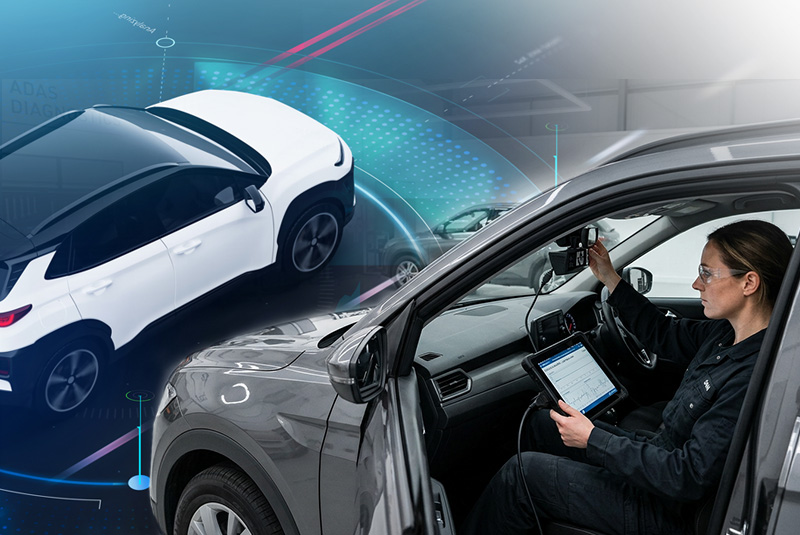
The collision repair industry is undergoing one of the most significant transformations in its history. Vehicles are no longer defined solely by mechanical systems and structural components. Today, they are increasingly software-driven platforms equipped with advanced sensors, cameras, radar systems, and safety technologies that monitor the driving environment.
As Advanced Driver-Assistance Systems become standard equipment across vehicle fleets, collision repair complexity continues to rise. What was once a straightforward repair process now involves an intricate network of technologies that may require inspection, repair, recalibration, and validation before a vehicle can safely return to the road.
This evolution is creating new challenges for insurers, independent appraisers, third party administrators, repair facilities, and multi-shop operators. Traditional repair planning methods are struggling to keep pace with the increasing volume of calibration requirements and the operational complexity associated with them. As a result, the industry is at a critical inflection point: organizations must rethink how they operate and embrace new technologies that deliver greater transparency, consistency, and efficiency.
The Growing Complexity of ADAS
Modern vehicles may contain dozens of sensors and electronic modules supporting functions such as lane-keeping assistance, automatic emergency braking, adaptive cruise control, collision avoidance systems, and driver monitoring technologies.
Even relatively minor collision damage can impact these systems, making calibration an essential part of the repair process. Yet despite the growing importance of ADAS calibration, the industry has historically faced challenges in identifying exactly what procedures are required, how they should be performed, and how much labor should be associated with each operation.
This lack of standardization often creates uncertainty throughout the claims and repair ecosystem. Insurers seek consistent estimates and clear visibility into repair costs. Repair facilities need clarity around required operations and labor planning. Appraisers require confidence that estimates reflect the full scope of work necessary to restore vehicle safety and functionality.
As vehicle technology continues to advance, the need for more structured, data-driven approaches becomes increasingly urgent.
Data Visibility Matters More Than Ever
Organizations across the automotive ecosystem are investing heavily in digital transformation initiatives designed to eliminate inefficiencies, reduce manual interpretation, and create greater consistency across repair workflows.
Clear visibility into repair operations not only improves planning and decision-making but also helps stakeholders align around a common understanding of repair requirements. When calibration procedures, labor requirements, and operational needs are clearly defined, organizations can reduce friction, streamline approvals, and improve overall productivity.
Transparency also plays a critical role in supporting vehicle safety. As repairs become increasingly dependent on software and electronic systems, detailed documentation and traceability become essential components of the repair process. The industry is moving toward a future where data serves as the foundation for faster, more accurate, and more consistent decisions.
Technology is Breaking Down Barriers
AI, VI, connected platforms, and advanced data intelligence are rapidly reshaping how collision repair organizations operate. Technology is helping businesses move beyond fragmented workflows and disconnected systems by providing actionable insights at the point of decision-making. Instead of relying on manual research and interpretation, repair stakeholders can increasingly access structured information that helps guide repair planning with greater precision.
This shift represents more than digitization. It signals the emergence of entirely new operating models centered on collaboration, automation, and shared visibility. As vehicles continue their transition toward software-defined architectures, organizations that embrace connected technologies will be better positioned to manage complexity, improve operational efficiency, and maintain customer confidence.
The future of collision repair will depend on solutions that can bridge data gaps, connect stakeholders, and provide clarity where ambiguity has traditionally existed.
Introducing a New Approach to ADAS Labor
Recognizing these evolving industry needs, Solera has announced the launch of Qapter® Estimating ADAS Integration in partnership with Azimuth Claims Solutions.
The new capability establishes a dedicated view of ADAS calibration procedures, operational requirements, and associated labor times directly within the estimating process. By separating ADAS operations from broader repair estimate calculations, insurers, independent appraisers, repair facilities, and multi-shop operators gain greater visibility into calibration-related requirements.
This approach provides a more comprehensive understanding of the work required to complete repairs safely and efficiently, helping stakeholders assess repair plans with increased confidence.
The launch of Qapter Estimating ADAS Integration reflects a broader industry shift toward connected technologies that simplify complexity and enable more informed decision-making. This new Qapter feature solution helps establish a new standard for collision repair planning, and stronger outcomes for everyone involved in the claims journey.
Interested in learning more? Fill out the form below to stay ahead of industry change and gain greater visibility into ADAS-related operations.